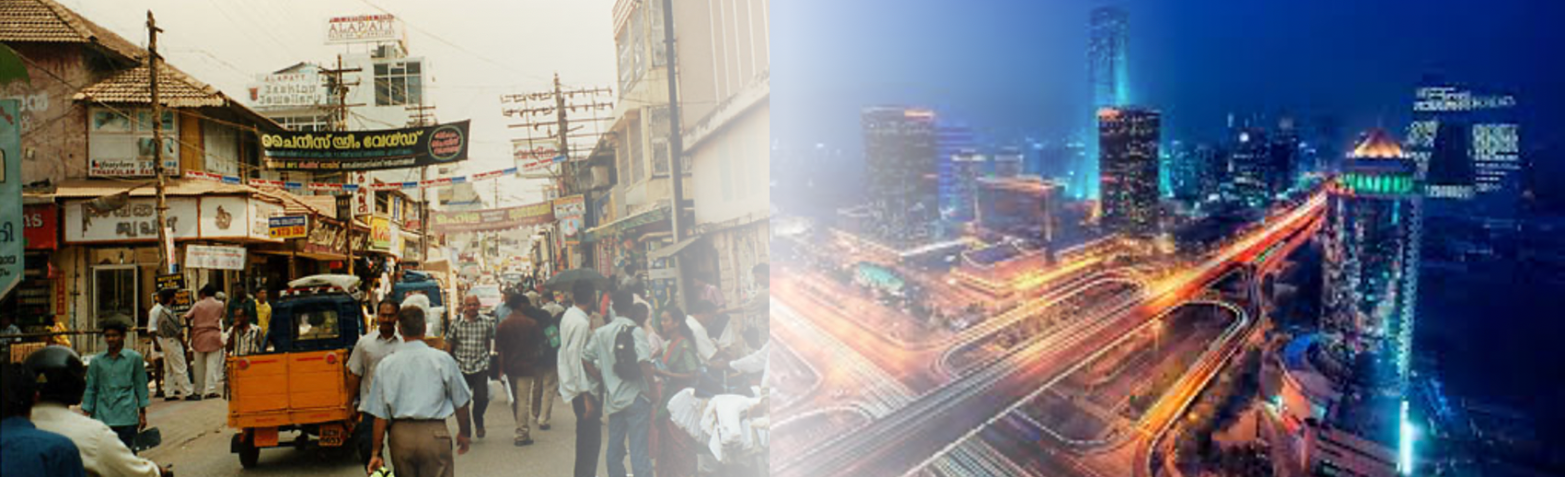
A self reliant India capturing opportunities across the five pillars of economy, Infrastructure, Technology, Demographics, and Demand; recognising simultaneously the need for reforms across Land, Labour, Liquidity, and Laws has been a clarion call given by our Prime Minister – How will we achieve it given our legacy?
We have for long been a nation bound by shackles inherited from our colonial past and perpetuated through subsequent democratically elected governments which were comfortable in treading gingerly each for reasons of their own political dialectics.
From having an Indian Salt Service which employs less than 10 officers and is yet to be phased out after 73 years of independence (the Salt Cess Act enacted surprisingly in 1953 and therefore not by the British), we have several archaic laws of the British which have been allowed to be continued. When was the last time we in urban India, sent letters thru Indian Post, and how many times have we sent these letters disguised as documents thru couriers so as not to attract the provisions of the Indian Post Office Act of 1898. In the last few years, we have repealed more than 1500 of these laws but there are considerably more which require, if not to be repealed, to be at least rewritten.
The insecurities of a young independent nation suddenly left to fend for herself and facing strife both internally and externally, may have led to perpetuation of the psyche for control. This was further accentuated by adoption of the Soviet model of a planned economy which constrained our world view to that of incrementalism and not facing up to a complete break from the past.
Neither have we been able to get rid of poverty ,as we would have wished,through redistributive justice nor have we been able to generate surpluses to be counted as a developed economy. At the same time, however, we have , indeed, made some progress, in the gradual opening of our economy of license and quota raj ( sugar, vegetable oil, cement, steel, and for some time, butter too, were controlled items to be sold only against permits with waiting lists for cars and scooters and quotas for their purchase against foreign exchange only); imagining those days, we have made considerable progress , since then, no doubt, but yet remained only a developing economy. But, how did we allow this to continue for seven decades so much so that most of our citizens did not even have an identity, and for those who had, the identity became an entitlement and not a right. Through this period, we continued with more of the same that we had inherited, but did not have the courage or the vision to break clear of these shackles, which post independence had been self imposed and not forced on us.
Where did we goof up? Why did we not break clean? What held us back? Perhaps it was required at that point of time. We should grant our leaders this benefit of doubt.
We inherited our Bureaucracy from the British and grew it further as they formed the iron frame which held our democracy together in the initial years. From the Business of the Government, which was to maintain Law and Order, collect Revenues, and provide for Social Services, Education, Health, etc the need for economic development and employment led to the role being enlarged to Government and Business, providing necessary assistance for businesses to be established but since these did not bring in desired effects, we finally enlarged the role to Government in Business and further expanded the scope by establishing both manufacturing and trade businesses as a part of our governance structure. As history has borne, a majority of these investments have yielded subpar results.
Maybe the demands of a planned socialist economy warranted these gradual enlargement of the role of the government which Andre Gunder Frank defines as the “development of underdevelopment”.
We have had the best of civil servants trained in the most prestigious universities and institutions of the world; some of their colleagues from the same IITs and IIMs are heading global corporations. Why did they not steer us on a faster and bolder path of reforms?
Why does it take a person coming from the most humble of backgrounds, starting life as a tea seller, to understand the needs of this country and have the courage to announce the start of the new deal for India – Vocal for Local and a self reliant India. He started his first term with less government and more governance. Critics would decry that, actually, this has not happened and to the contrary there has been quite the opposite. A lot of good reforms initiated by the present government, critics say, have had last mile connectivity issues. Perhaps, even if these have not been able to deliver 100%, at least more has been achieved in the last few years than in the last several decades – this is undeniable.
We have to get rid of our mistrust and enable a confident nation to strive to find its true place in the League of Nations. We have to get rid of our control mania where every scheme is formulated with a major intention of ensuring against abuse (which should be by way of exception management), resulting in non deliverance except through intervention which has perpetuated both pelf and power in the ranks of the implementing machinery. This also perpetuated crony capitalism thru quotas, allocations, licenses, and approvals being captured by a small group of businesses at immense loss to the state and its people. Who is responsible for this? While we hold the politicians responsible for most of our ills, which may not be entirely misplaced, can our bureaucracy be absolved of this failure to meet the expectations?
While one can’t but admire the steps taken by Lee Kuan Yew in the small island state of Singapore, why haven’t such examples like those of Singapore Airlines or the Government Investment Corporation or Temasek inspire or occur to our policy makers. Singapore Airlines, after initial capitalization, has not required any further infusion of funds by its Government – Why? They were given full authority to operate on a fully commercial basis and it was made clear up front that there would be no further capital to bail them out. Today they are one of the largest and most successful airlines. Contrast this with Air India and Indian Airlines. Despite multiple infusions of capital which are much more than the initial capital infused in Singapore Airlines, these airlines are barely managing to survive, and that too with the Government’s help. We haven’t even learnt a lesson from the success of Maruti which was partly freed of political and bureaucratic shackles to grow and blossom into the largest car manufacturer in the country in the face of global competition, yielding exceptional payback to the Government on their initial investment.
Now when our Prime Minister is embarking on breaking these shackles, it is perhaps time for him to revisit his promise of less government and more governance, leveraging on digital technology for a fair and transparent delivery mechanism. Why do we need a ministry of steel or for that matter aviation or telecom or banking when we have separate regulators and super regulators for each of these? It is time we broke clean of decentralised policy making and moved to centralised decision making and let these administrative ministries be only responsible and monitorable for ultimate delivery. For far too long, they have majorly been a part of the problem and not the solution. It’s time that our bureaucracy delivered on the same lines as some of their ex colleagues at Google, Microsoft, Adobe, MasterCard, and IBM. It’s time we empowered them to deliver digitally and efficiently.
Disclaimer : This is a personal blog. Any views or opinions represented in this blog are personal and belong solely to the blog owner and do not represent those of people, institutions or organizations that the blog owner may or may not be associated with in professional or personal capacity, unless explicitly stated. Any views or opinions are not intended to malign any religion, ethnic group, club, organization, company, or individual.
 The Indian Banker